


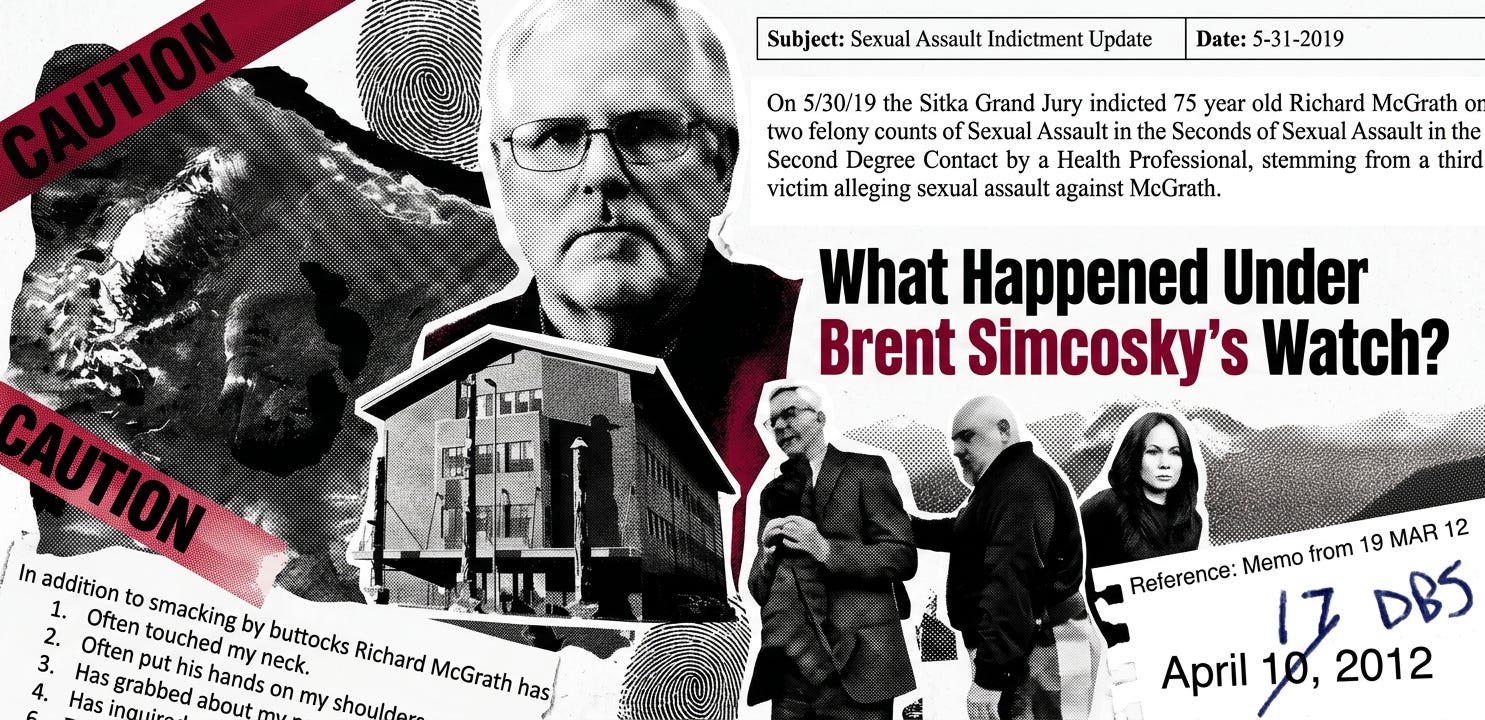
Who is Brent Simcosky?
When Brent Simcosky joined the Jamestown S’Klallam as Health Services Director in 2012, Jamestown Health was a small clinic. Today, it is a rapidly expanding healthcare enterprise and financial pillar within the community. Simcosky is no stranger to Indian Country, having spent most of his career in tribal healthcare and administration. He’s also served as a policy analyst on the WA Governor’s Office of Indian Affairs (GOIA), was the Interim Executive Director for the American Indian Health Commission for Washington State (AIHC), and wrote a book on tribal development: Proud Nations: Celebrating Tribal Self-Governance.
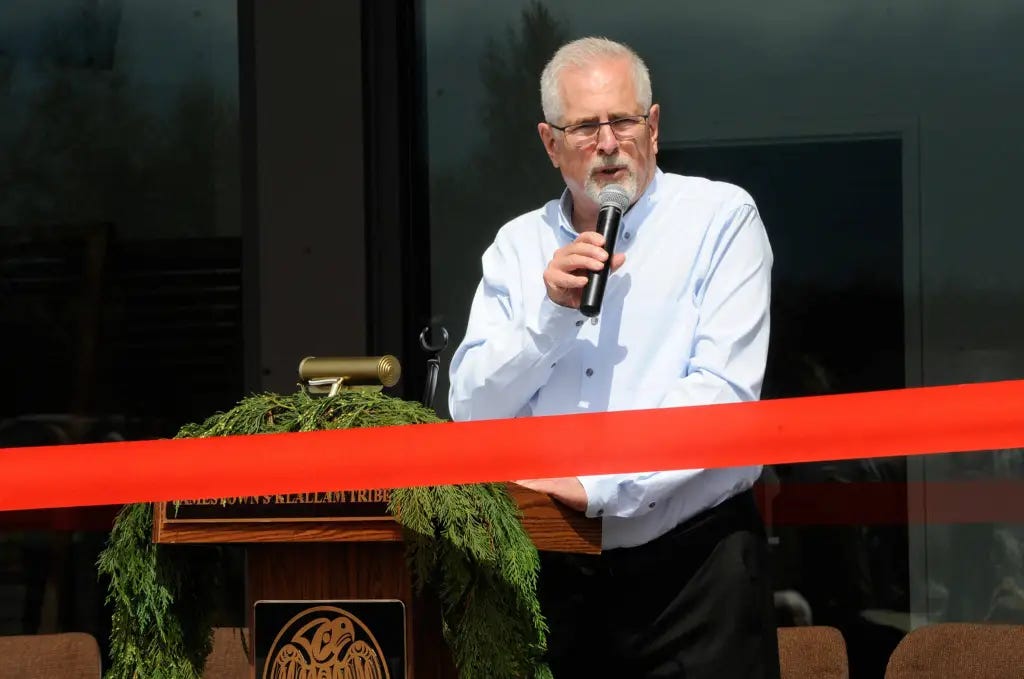
Under Simcosky’s leadership, Jamestown HealthCARE vastly expanded their services. From a single leased clinic, to multiple tribally owned and operated facilities, their footprint grew exponentially. Most recently, Simcosky oversaw Jamestown’s ventures into mental health and substance abuse treatment. Leveraging Local, State, and Federal partnerships, Simcosky grew a small health clinic for tribal citizens, into a diversified healthcare system serving the greater Olympic Peninsula.
Simcosky is clearly a savvy businessman and a key asset to the the Jamestown S’Klallam Tribe. But recent news reports from Alaska have raised questions about Simcosky’s leadership, oversight and accountability.
Before accepting a position with the Jamestown S’Klallam, Simcosky was the Medical Administrator for the Ketchikan Indian Community. There, he employed Dr. Richard McGrath, the Medical Supervisor for Ketchikan Indian Community (KIC) Tribal Health Clinic.
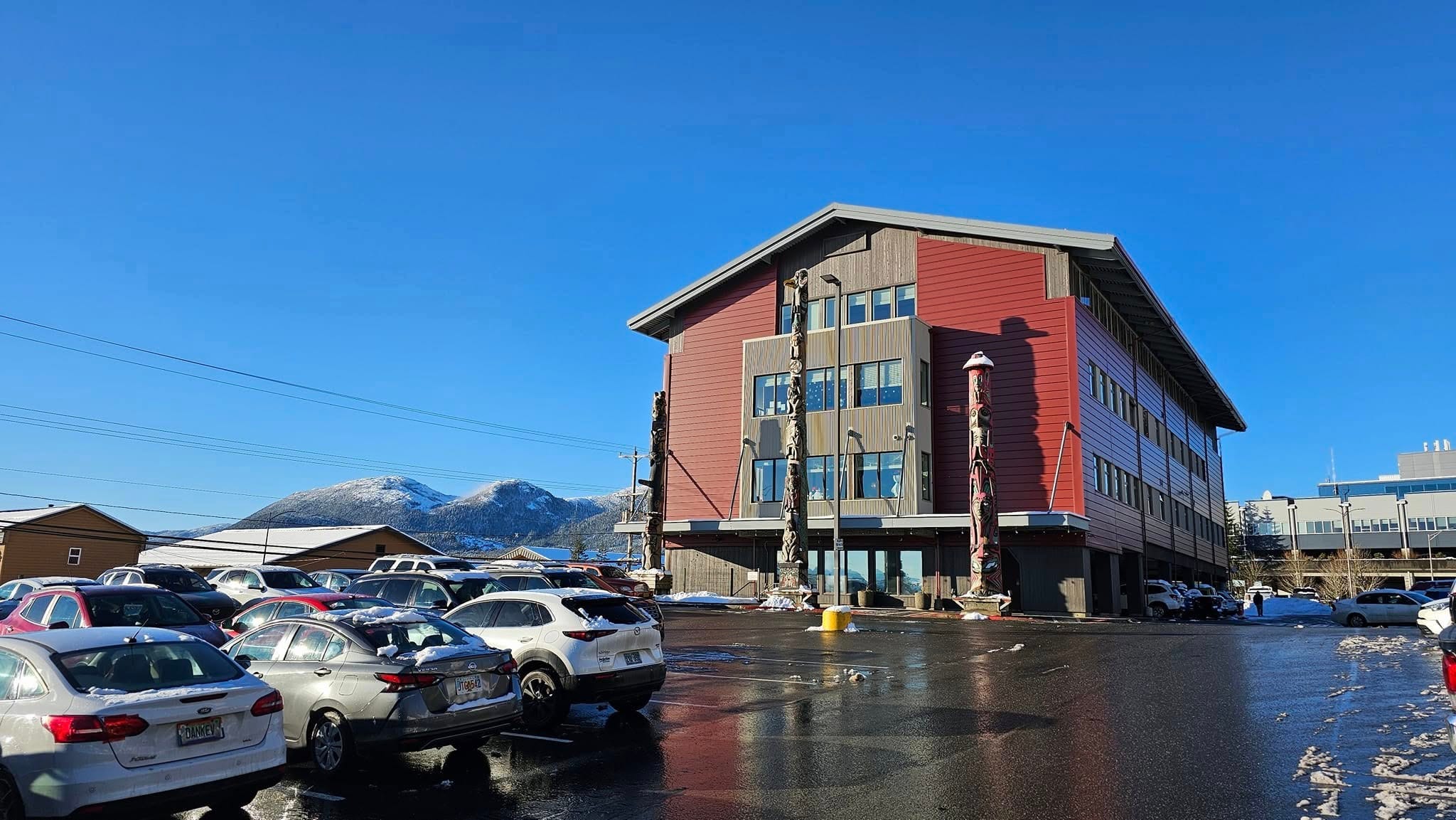
In 2023 McGrath was found guilty of sexual assault in the 3rd degree after being indicted for thirteen counts of felony sexual assault against female patients. McGrath disguised his assaults as medical examinations. After the appointments, the victims recognized the behavior was abusive and reported it to law enforcement.
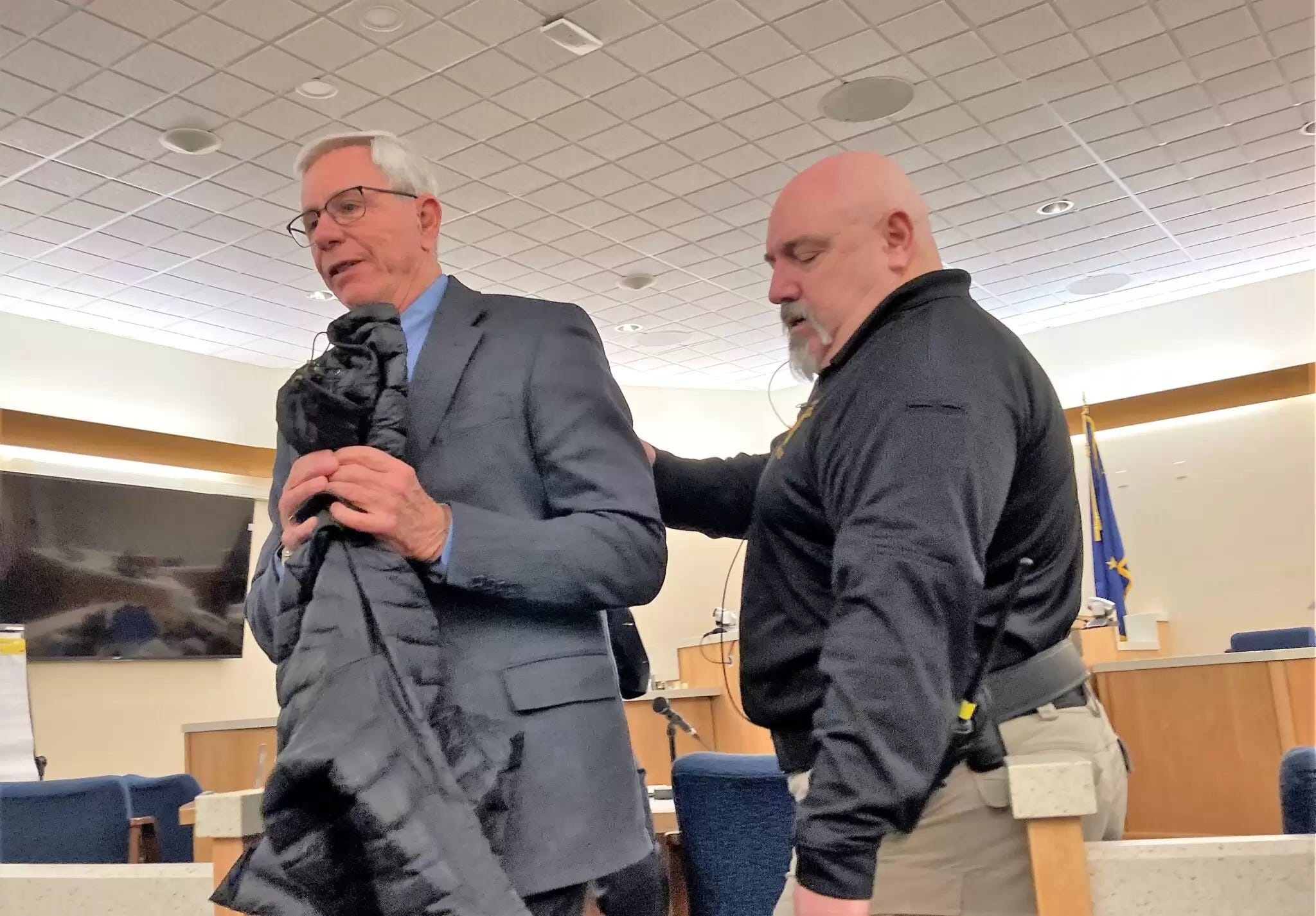
But this was not the first time McGrath had been accused. Twelve years earlier, an Indigenous lab technician at the Ketchikan Clinic reported that McGrath repeatedly touched her inappropriately. Less than a month later, the complaint was formally dismissed. McGrath’s behavior was defended in a letter to the technician. That letter was hand delivered, and initialed, by Brent Simcosky. Simcosky told the woman she could file an HR grievance. She immediately did. Within days, she was fired without explanation.
Phoenix Johnson’s Story

In 2012, Johnson, a citizen of the Tlingit and Haida Nation, was a 26-year-old Air Force veteran working for the Ketchikan Indian Community (KIC). For Johnson, the job represented a return to her mother’s Indigenous community and an opportunity to give back. But within weeks, she says, her supervisor, Dr. Richard McGrath, began repeatedly invading her physical space and touching her inappropriately. On the morning of March 19, this behavior culminated with McGrath slapping her buttocks. That day, Johnson reported him to the tribe’s human resources department. Three days later, she submitted additional documentation describing other incidents involving McGrath touching her neck, thigh, hair and breast. HR told her they would investigate.


Less than a month later, on April 17, Johnson received the KIC’s written response. The letter, issued by the Tribe’s General Manager Debra Patton, rejected Johnson’s sexual-harassment complaint. It characterized the conduct as “non-intentional communication and physical contact.” The response said McGrath’s behavior may have been misunderstood because of his “casualness.” It justified the butt slap as accidental and said no witnesses supported Johnson’s other allegations. Simcosky, initialed and hand delivered the letter. He told her if she was unsatisfied, she could file a HR grievance. Johnson did so immediately. A few days later, Simcosky called Johnson, and asked her to meet with HR. At that meeting, Johnson was fired and escorted out of the clinic.


Reeling with fear and confusion, Johnson only told a few friends what had happened to her in Ketchikan. Meanwhile gossip spread quickly — accusing her of seducing McGrath.
“The rumor was that I was a harlot,” she said. “I was a 26-year-old single mom, honorably discharged. I came home to be part of my own culture as part of my identity reclamation journey. The only thing that came out [of it] was gossip that I had a thing with a 60-plus-year-old white man who is a predator. It was so destabilizing.” (Native News Online)
Facing a total loss of income. Johnson took on a series of odd jobs. After months of saving, she left Ketchikan, the homeland she had once longed to return to.
“I was depleted on every level, emotionally, mentally, spiritually,” she said. “It really rocked my trust and humanity. And I think the hardest, hardest part is it, it really degraded, even broke, you know, a lot of my relationship and my trust in my own people.” (Native News Online)
Johnson Breaks Her Silence
More than a decade later, Johnson saw her abuser in a news report announcing his conviction. Living in Seattle and working as a political consultant and civil rights advocate, she thought she had moved past the trauma in Ketchikan. Seeing Richard McGrath brought her right back to the clinic.
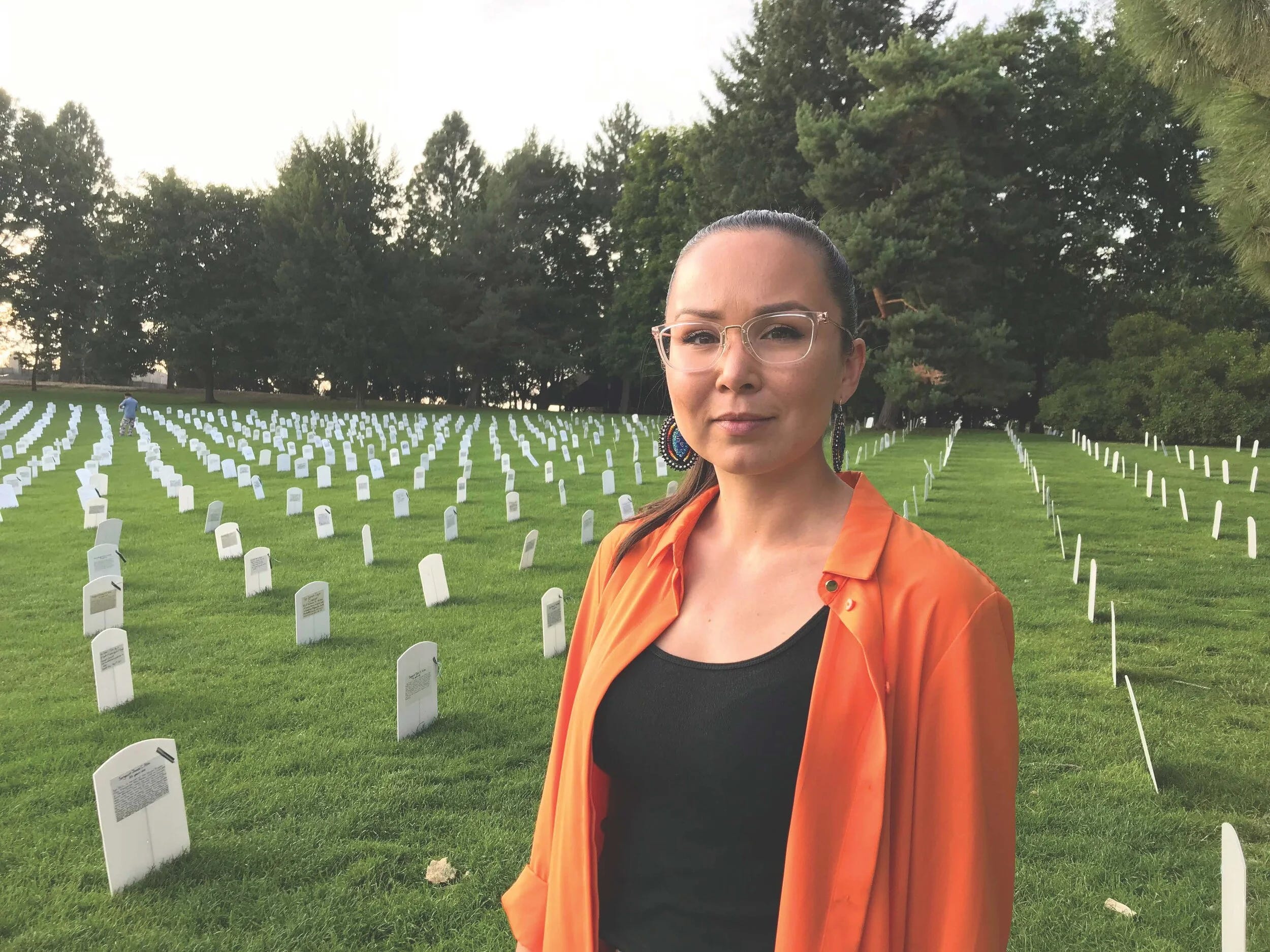
“It just kind of sent chills through me” she told Native News Online. “Seeing his face was a lot harder for me than I had expected…I cried. I felt angry. I also felt vindicated.”
With newfound courage, Johnson began telling her story to Alaskan media and sexual assault advocates. She argues that the KIC’s & Simcosky’s failure to act on her 2012 complaint allowed McGrath to continue working in health care and put other women at risk.
In an interview with Katie Koestner on the Dear Katie podcast, Johnson specifically names Simcosky, emphasizing the racial inequality she’s observed through her experiences at Ketchikan.
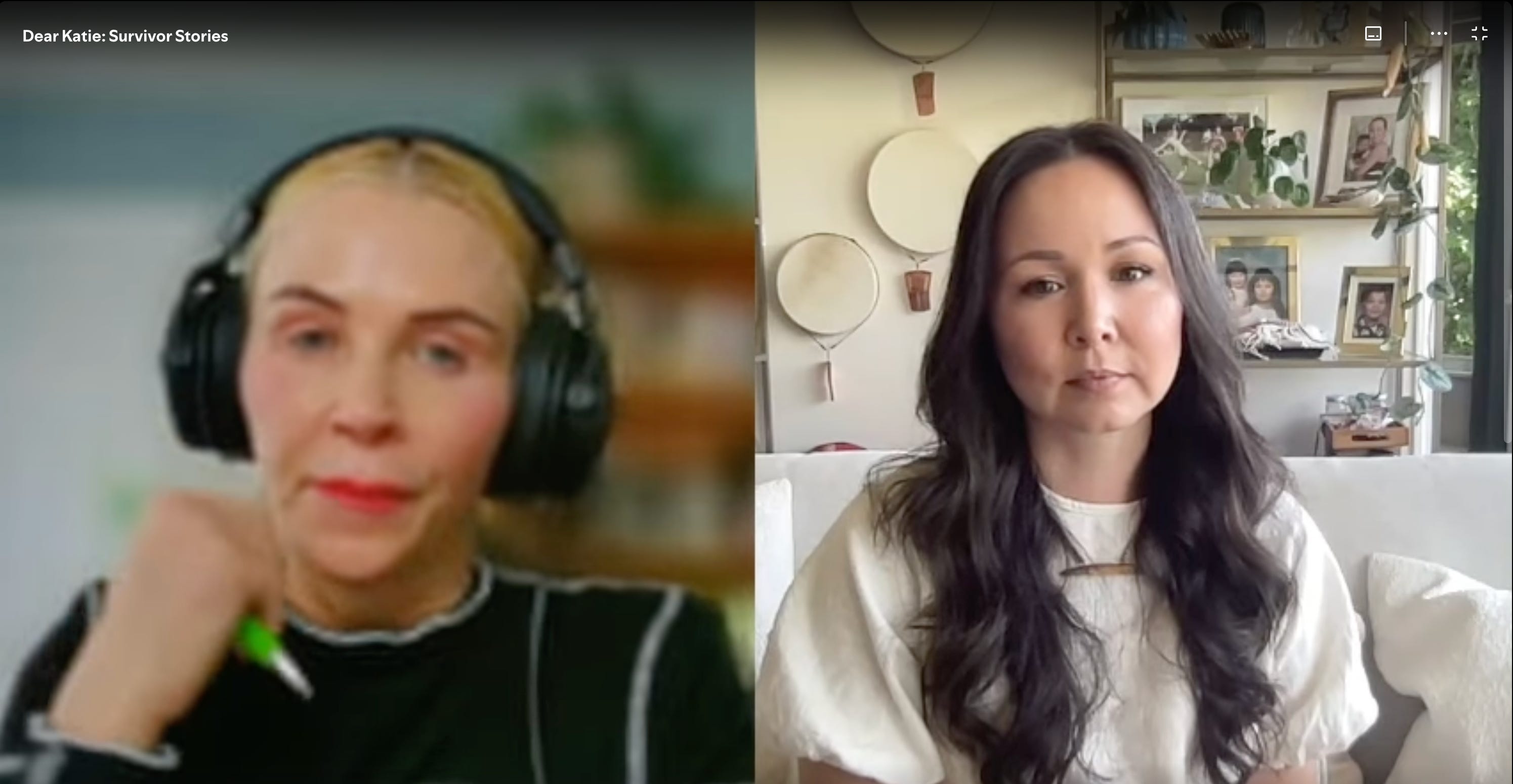
”Brent Simcosky…actually now works at Jamestown S’Klallam here in Washington at a larger Indian health institution as a non-Native. So he got to escalate his career, and I got fired…It’s a culture of misogyny…I’m an Indigenous woman and unfortunately, there’s a deafening apathy towards me and folks like me.” (Dear Katie Podcast)
Questions for Simcosky & Tribal Leadership
As of publication, Phoenix’s story has not received any media coverage in Washington State. Simcosky has not addressed his involvement in the sexual assault investigation nor Phoenix’s termination. Ultimately, he was the highest authority within the KIC clinic’s administrative chain, and personally oversaw the response.
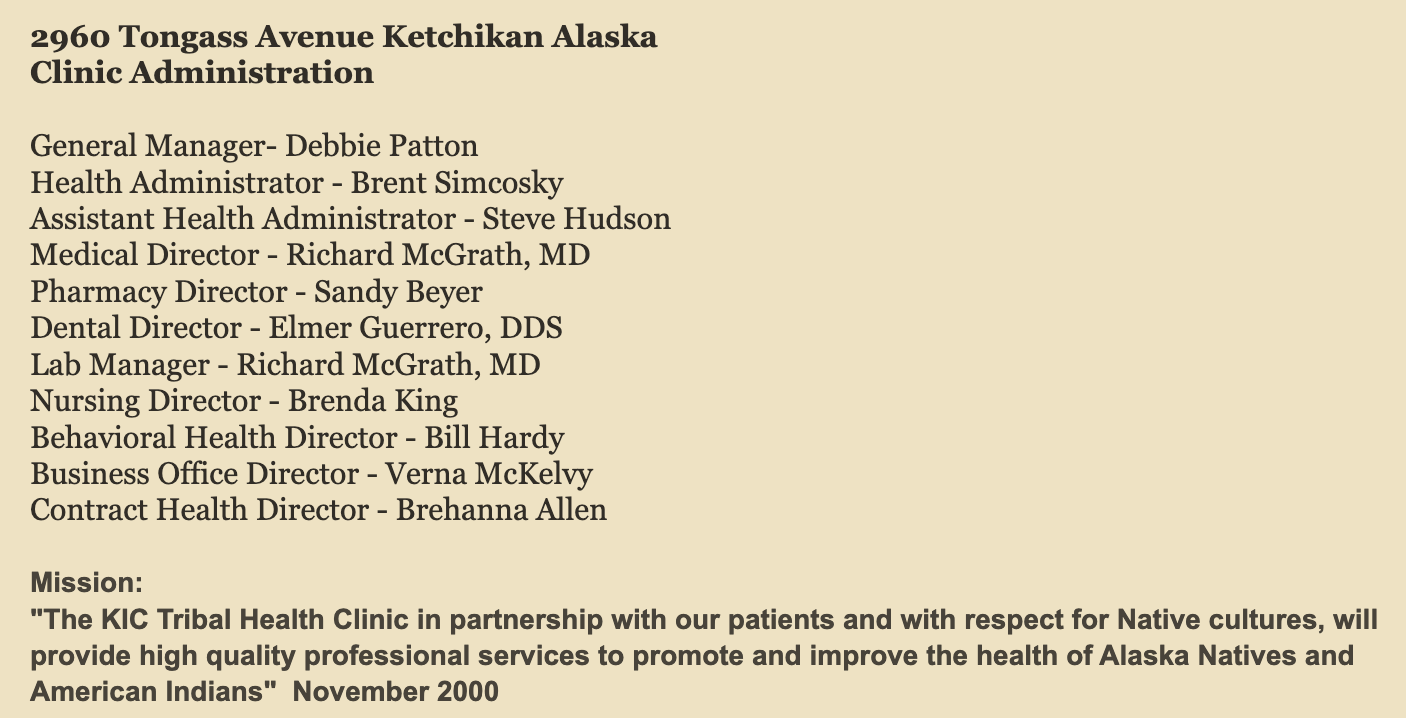
Phoenix was fired from the Ketchikan Tribal Health Clinic in April of 2012. Six months later, Simcosky joined Jamestown Sklallam as Health Director. It is unknown if Jamestown leadership knew of the scandal, or if Simcosky’s departure from Ketchikan was related to Phoenix’s termination.
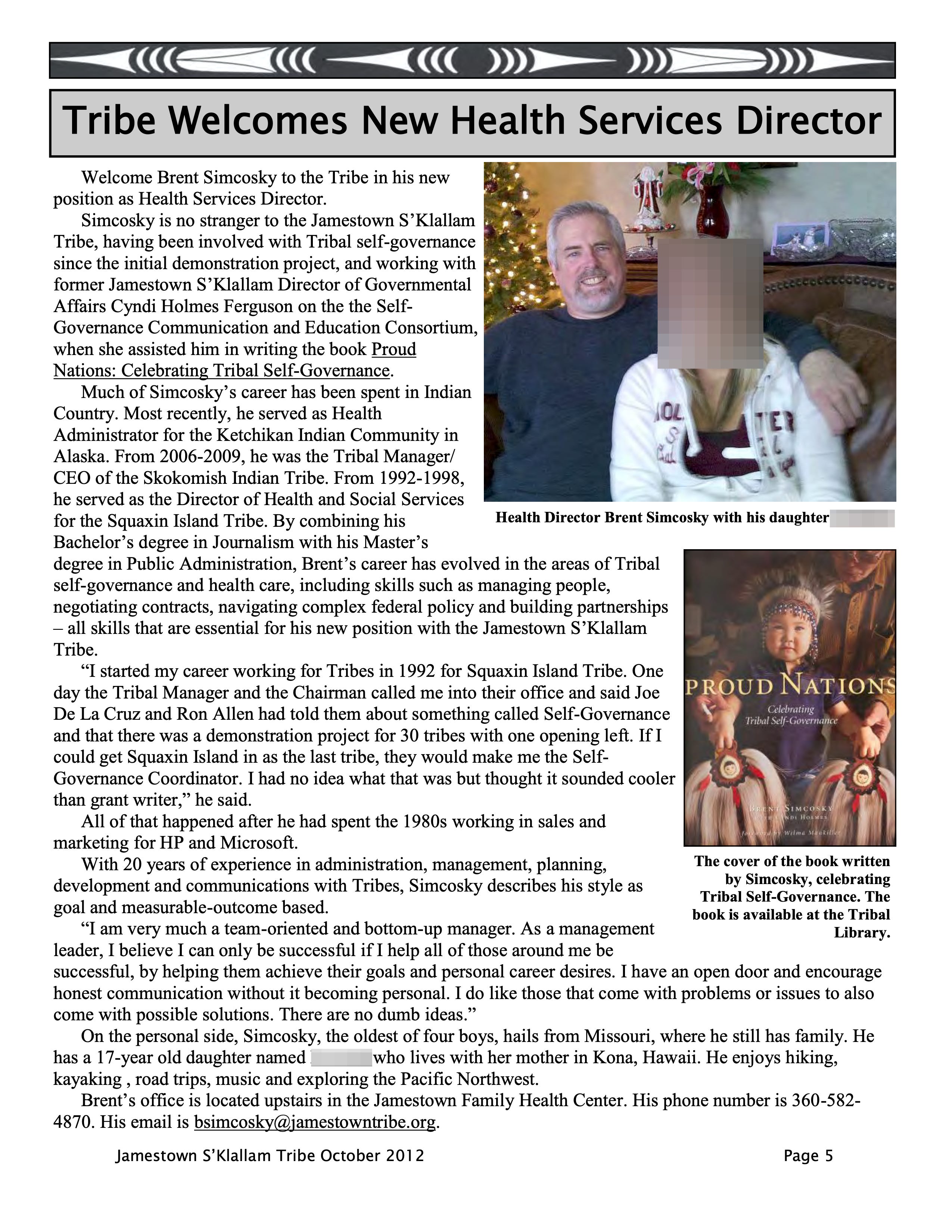
As Jamestown expands into substance abuse and psychiatric care, they are catering to a patient population who are at a statistically higher risk of sexual abuse. Johnson’s story calls Simcosky’s administrative leadership, and the entire Jamestown HealthCARE enterprise, into question. If a Native or non-Native employee or patient reports sexual misconduct, will they be protected?
While Jamestown maintains a joint policing relationship with the Clallam County Sheriff’s office through an interlocal agreement. Tribal facilities are defined as “Indian Country” and crimes committed on their premises are prosecuted in Tribal Court. These types of arrangements often create jurisdictional barriers.
Johnson faced these barriers after her termination. She reported her assault and termination to state and local law enforcement agencies in Ketchikan, but found them unwilling or unable to take her case. She also filed a grievance with the Indian Health Service early this year, but is skeptical that they will act. Johnson contends there needs to be more effective Federal oversight.
”Being Indigenous and being in a clinic that is run by an Indigenous tribe, but my perpetrator being non-Indigenous…the pressure really is, I think, on the Federal Government to be responsible for their citizens, regardless of necessarily where they were. And I know that tribal sovereignty is of the utmost importance. But I existed in this gray area where if there were policies, there was no enforcement. There was no expectation. And there sure as heck is not going to be restitution.” (Dear Katie Podcast)
As Jamestown S’Klallam HealthCARE continues to expand, its leadership will inevitably face similar questions about policies, reporting procedures and protections for patients and employees. Whether those systems are sufficient is an important matter for tribal management to consider.
It’s not a hypothetical risk. For Johnson, the issue is personal.
”I would say it’s not just that we need more protections in place, but I think that there are sanctioned legal avenues to actually get away with crimes…If we’re not doing something about it, we’re just encouraging it.” (Dear Katie Podcast)
The unanswered questions surrounding Johnson’s 2012 complaint remain relevant today: What did Simcosky know? What responsibility did he have? What has changed since then? And, most importantly, if someone reports misconduct within a Jamestown S’Klallam healthcare facility, what happens next?
https://www.krbd.org/2026/04/02/after-sitka-doctor-is-convicted-of-assaulting-patients-a-former-ketchikan-colleague-comes-forward-2/
https://nativenewsonline.net/health/no-one-believed-her-11-years-later-her-abuser-was-convicted-sexual-assault/
https://alaskapublic.org/news/public-safety/2026-04-01/after-sitka-doctor-is-convicted-of-assaulting-patients-a-former-ketchikan-colleague-comes-forward
Dear Katie Podcast - Spotify